


Long story short
It’s not magic—it’s flavor chemistry. We love cheese because of three key elements: Umami (the natural flavor booster), Fat (the aroma carrier), and Tyrosine crystals (that satisfying crunch in aged cheeses). In organic cheese, these components occur naturally, creating a deep, complex bouquet of flavors.
Full Article
Hey, Maya here.
As a fan of mindful eating (and science!), I love knowing exactly what’s on my plate. And you know what? That incredible cheese flavor isn't an accident. It’s fascinating biochemistry.
With European organic cheeses, this "chemistry" is especially cool because it comes 100% from traditional production methods. Here are 3 scientific reasons why our taste buds are so obsessed with good cheese.
1. Umami: The Fifth Taste
Cheese is a natural source of glutamic acid. Don’t confuse this with food additives! I’m talking about a natural amino acid that’s released when milk proteins break down during the long aging process. This is what creates Umami—that deep, "savory," brothy aftertaste². Umami is what gives a dish depth, making it taste "round" and giving us that sense of culinary satisfaction. The older and more aged the cheese (like an organic hard cheese), the more intense the umami experience.
2. Fat: The Aroma Bus
From a chemical standpoint, most aroma compounds (which are responsible for the lion's share of what we call "flavor") dissolve in fats, not water. The fat in cheese plays a crucial role—it acts as a "carrier" that stores these volatile aromas and releases them slowly in your mouth as the cheese starts to melt from your body heat.
Why does ORGANIC matter for flavor? If a cow ate a variety of herbs and grass in a meadow (which is the standard in European organic farming³), specific aroma compounds from those plants (terpenes) pass into the milk¹. Thanks to the fat, these unique notes—meadowy, nutty, or floral—are preserved in the cheese. Mass-produced cheese from industrial farms often has a much flatter, boring aroma profile.
3. Tyrosine Crystals: The "Quality Crunch"
You know that feeling when you eat a long-aged cheese and feel tiny, crunchy bits under your teeth? That’s not salt. Those are tyrosine crystals. They form naturally when cheese is left to age in peace for many months, and the protein structure transforms, crystallizing into clusters of pure flavor. It’s proof that the cheese aged slowly and traditionally. For a connoisseur, this unique texture is a signal of the highest quality product.
Maya’s Verdict:
We love good cheese because it’s sensorially complete. It has the fat (aroma carrier), the unique texture (crunch), and the umami (depth of flavor).
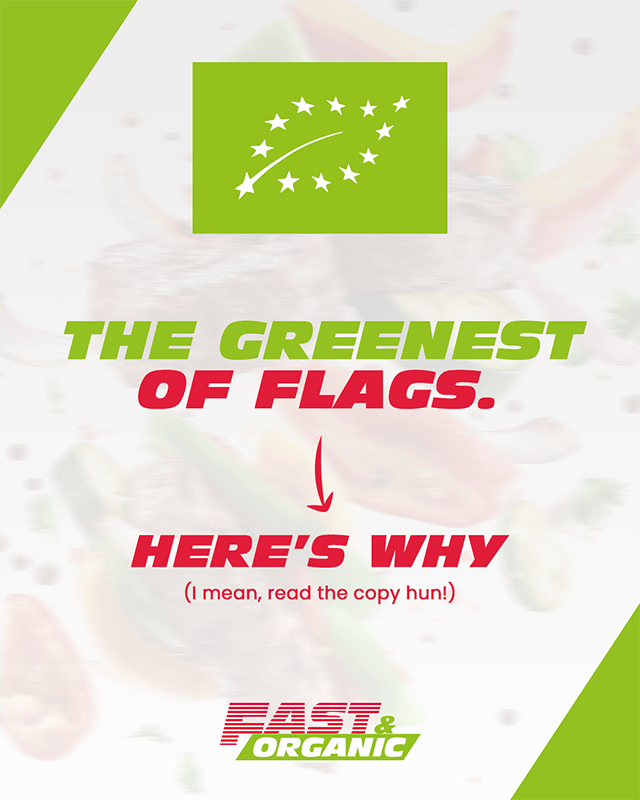
By choosing cheese with the Green Leaf symbol, you’re picking a product where this amazing chemistry happened fully naturally, without rushing the process.
Happy tasting!
– Maya
Sources:
¹ https://www.mdpi.com/2304-8158/7/3/37
² https://pubmed.ncbi.nlm.nih.gov/17995691/
³ https://agriculture.ec.europa.eu/farming/organic-farming_en